New Order Found Please Review the order ASAP for the client to
proceed

Unread Message Found Please check the message ASAP and reply to client

I. Introduction
A. Definition of a Business Management Dissertation
Business Management Dissertations are scholarly works that represents a focused and comprehensive exploration of critical aspects within the realm of business administration. This academic undertaking involves an in-depth examination of organizational dynamics, strategic management, operational processes, and various functional areas such as human resources, finance, and marketing.
Unlike routine academic assignments, business management dissertations demands an original contribution to the existing knowledge base, often requiring empirical research, data analysis, and the development of theoretical frameworks. It is a scholarly endeavor that seeks to address real-world challenges, offering valuable insights and recommendations for effective business practices.
Rooted in an interdisciplinary approach, Business Management Dissertations draws upon theories from economics, psychology, sociology, and other relevant fields to provide a holistic understanding of the multifaceted dimensions of modern organizational leadership. The ultimate goal is not only to demonstrate a mastery of the subject matter but also to contribute new perspectives, methodologies, or practical applications to the broader discourse in the field of business management.
B. Importance of Writing a Well-Structured Dissertation
II. Choosing a Topic for Business Management Dissertations
A. Identifying Your Research Interests
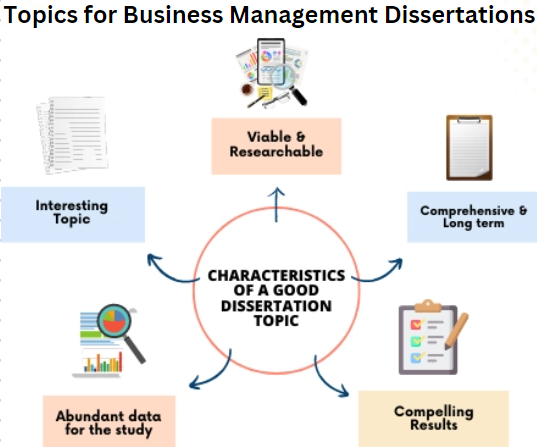
Selecting appropriate topics for Business Management Dissertations is a crucial step that demands careful consideration and alignment with your research interests. Begin by reflecting on your academic and professional experiences, identifying areas that have captured your curiosity and passion.
Consider the challenges and trends in the business world that resonate with your aspirations. Assessing your strengths and expertise can also guide you towards a topic where you can leverage your skills effectively. Engage with current literature to identify gaps or areas where further exploration is warranted. It's essential to choose a topic that not only aligns with your interests but also contributes to the existing body of knowledge. Consult with your academic advisor to refine your ideas and ensure feasibility.
Additionally, be mindful of the practical relevance of your chosen topic, as it should have implications for real-world business practices. Ultimately, the process of identifying your research interests is integral to selecting a Business Management Dissertation topic that not only excites and motivates you but also adds value to the academic and professional discourse in the field.
B. Assessing the Relevance to Business Management
When selecting topics for Business Management Dissertations, a critical factor to consider is the relevance of the chosen subject to the field of business management. The chosen topic should address contemporary issues or contribute to the understanding and improvement of business practices. Begin by identifying key challenges or emerging trends in the business landscape.
Assess how your chosen topic aligns with these challenges and trends, demonstrating its significance to the broader field. Consider the practical implications of your research—how it could inform decision-making, enhance operational efficiency, or contribute to strategic advancements within organizations.
Additionally, evaluate whether your chosen topic has the potential to fill gaps in existing literature, adding a valuable dimension to the understanding of business management. By ensuring that your dissertation topic is relevant to the current dynamics of the business world, you not only contribute meaningfully to the academic discourse but also make a potential impact on the practical aspects of business management.
C. Narrowing Down the Scope
When choosing topics for Business Management Dissertations, it's crucial to narrow down the scope to ensure a focused and manageable research project. Start by considering the broader themes within business management that interest you, and then refine your focus based on specific aspects or subtopics.
Assess the feasibility of the research in terms of time, resources, and access to data. Narrowing down the scope helps in creating a well-defined research question and allows for a more in-depth exploration of the chosen area. Consider the depth of analysis you can achieve within the constraints of the dissertation format.
Consult with your advisor to receive guidance on refining and narrowing your research scope. By clearly delineating the boundaries of your study, you enhance the precision and depth of your research, making it more manageable and ensuring that you can address the research question effectively within the scope of a dissertation.
III. Business Management Dissertations: Research Proposal

A. Crafting a Convincing Proposal
Crafting a convincing research proposal for Business Management Dissertations is a pivotal step in the academic journey, setting the stage for the entire research endeavor. A well-constructed proposal not only outlines the key research questions but also justifies the significance of the chosen topic within the context of business management.
It should clearly articulate the research objectives, methodologies, and expected outcomes. A compelling proposal demonstrates a thorough review of existing literature, highlighting gaps in knowledge and establishing the rationale for the proposed study.
Moreover, it is essential to articulate the potential contributions of the research to the field of business management, whether in terms of theoretical advancements, practical applications, or both. By meticulously crafting a convincing proposal, researchers not only secure approval for their dissertation project but also lay a solid foundation for conducting meaningful and impactful research in the dynamic landscape of business management.
B. Significance of a Clear Research Question
The significance of a clear research question in a Business Management Dissertations research proposal cannot be overstated. The research question serves as the guiding star, providing focus and direction to the entire study. A well-formulated research question not only delineates the specific issue or phenomenon under investigation but also paves the way for a structured and purposeful research design. It acts as a cornerstone for the proposal, aligning the study with the broader objectives of business management research.
A clear research question not only enhances the clarity of the proposal but also contributes to the feasibility and effectiveness of the subsequent research activities. It allows the researcher to navigate through the complexities of the chosen topic, ensuring that the study remains targeted and relevant. Additionally, a precise research question facilitates the evaluation of the study's contribution to the existing body of knowledge, underscoring the significance of the proposed research within the field of business management.
C. Literature Review as the Foundation
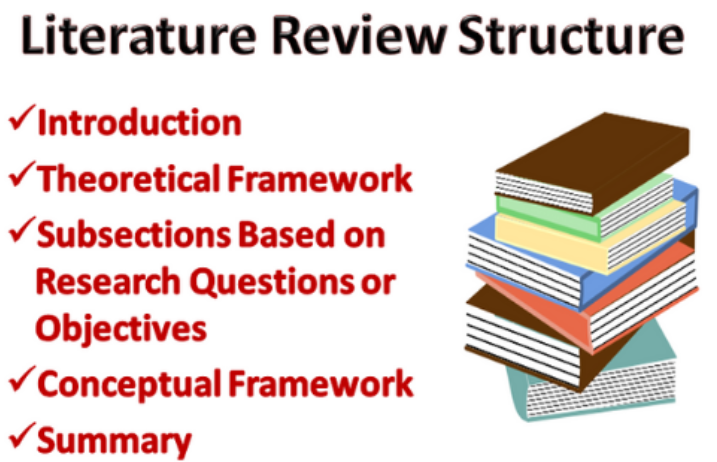
The literature review stands as the foundational element in a Business Management Dissertations research proposal, providing a comprehensive understanding of the existing knowledge landscape in the chosen field. Serving as the intellectual framework, the literature review not only synthesizes relevant theories, concepts, and empirical studies but also identifies gaps and unresolved issues.
This critical analysis of existing literature forms the basis for the formulation of research questions, hypotheses, and the overall research design. A well-constructed literature review demonstrates the researcher's grasp of the current state of the field, highlighting key debates and insights.
It is through this synthesis of scholarly works that the researcher positions their study within the broader academic discourse, showcasing the novelty and significance of their proposed research. As the bedrock of the research proposal, a robust literature review ensures that the subsequent research activities are informed, relevant, and poised to make a meaningful contribution to the field of business management.
IV. Literature Review of Business Management Dissertations
A. Conducting a Thorough Literature Search
The literature review in business management dissertations plays a pivotal role in shaping the research landscape and establishing the academic foundation for the study. A thorough literature search is essential to comprehensively explore existing scholarship, identify gaps, and position the research within the broader context of business management.
The process begins by clearly defining the scope and objectives, followed by the identification of relevant keywords and phrases. Utilizing academic databases and employing Boolean search operators helps refine and broaden the search, while exploring citations and bibliographies of key works enhances the depth of the review.
The systematic organization of literature aids in synthesizing information, and a critical evaluation of sources ensures credibility. The literature review is not a static process; it requires regular updates to incorporate new research and maintain relevance. By following these steps and consulting with advisors, researchers can conduct a robust literature review that enriches the scholarly foundation of their business management dissertations.
B. Analyzing and Synthesizing Existing Studies
The literature review in business management dissertations plays a pivotal role in shaping the research landscape and establishing the academic foundation for the study. A thorough literature search is essential to comprehensively explore existing scholarship, identify gaps, and position the research within the broader context of business management.
The process begins by clearly defining the scope and objectives, followed by the identification of relevant keywords and phrases. Utilizing academic databases and employing Boolean search operators helps refine and broaden the search, while exploring citations and bibliographies of key works enhances the depth of the review. The systematic organization of literature aids in synthesizing information, and a critical evaluation of sources ensures credibility.
The literature review is not a static process; it requires regular updates to incorporate new research and maintain relevance. By following these steps and consulting with advisors, researchers can conduct a robust literature review that enriches the scholarly foundation of their business management dissertations.
C. Identifying Research Gaps
The literature review in business management dissertations plays a pivotal role in shaping the research landscape and establishing the academic foundation for the study. A thorough literature search is essential to comprehensively explore existing scholarship, identify gaps, and position the research within the broader context of business management.
The process begins by clearly defining the scope and objectives, followed by the identification of relevant keywords and phrases. Utilizing academic databases and employing Boolean search operators helps refine and broaden the search, while exploring citations and bibliographies of key works enhances the depth of the review.
The systematic organization of literature aids in synthesizing information, and a critical evaluation of sources ensures credibility. The literature review is not a static process; it requires regular updates to incorporate new research and maintain relevance. By following these steps and consulting with advisors, researchers can conduct a robust literature review that enriches the scholarly foundation of their business management dissertations.
V. Methodology
A. Selecting the Appropriate Research Design
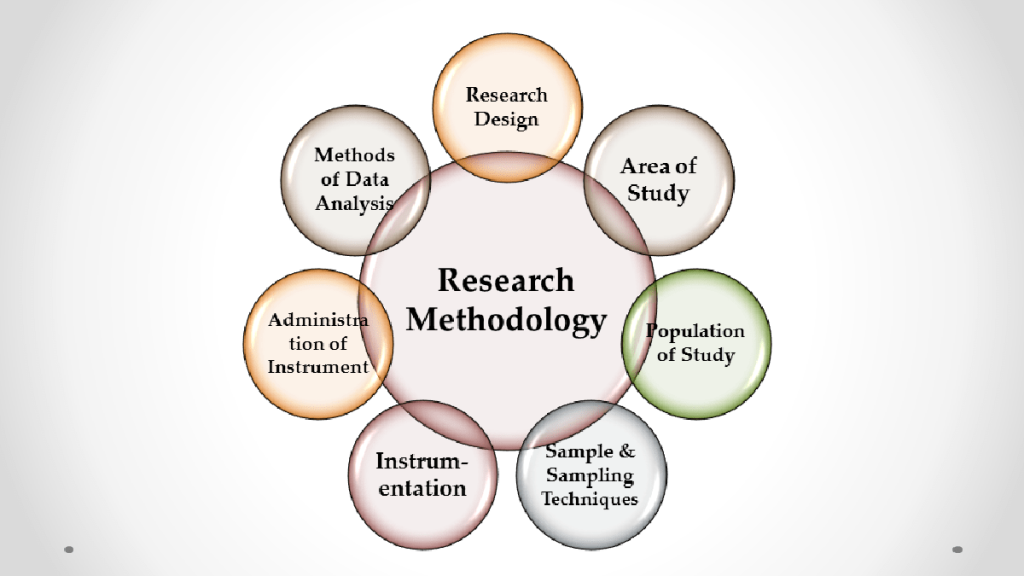
The methodology section of business management dissertations involves a crucial decision-making process in selecting the appropriate research design. The choice of research design significantly influences the validity and reliability of the study. Business management research commonly employs various research designs, including quantitative, qualitative, or mixed-method approaches.
Quantitative research designs involve the collection and analysis of numerical data, often employing statistical methods to generalize findings. Qualitative research, on the other hand, emphasizes exploring phenomena in-depth through non-numerical data, such as interviews, observations, or content analysis. Mixed-method approaches combine elements of both quantitative and qualitative methods for a more comprehensive understanding.
The selection of the research design should align with the research questions, objectives, and the nature of the business phenomenon under investigation. Researchers must carefully consider the strengths and limitations of each design, ensuring that their chosen methodology is well-suited to address the specific research goals of their business management dissertations. Additionally, ethical considerations and the practical feasibility of implementing the chosen design should also be taken into account.
B. Sampling Techniques and Population Selection
When addressing sampling techniques and population selection, careful consideration is essential to generate meaningful and applicable results. The choice of sampling method directly influences the representativeness of the data, thereby impacting the generalizability of the findings. Commonly employed sampling techniques in business management research include stratified sampling, random sampling, and purposive sampling.
The researcher must justify the selected technique based on the research objectives and the characteristics of the target population. Population selection involves defining the group from which the sample will be drawn, and its appropriateness hinges on the research questions and objectives. This section serves as a roadmap for the reader, elucidating the systematic approach employed to gather data, ensuring transparency, and bolstering the overall credibility of the business management dissertations.
C. Data Collection Methods
In the realm of business management dissertations, the methodology section extends its significance to the selection and justification of data collection methods. The chosen methods play a pivotal role in obtaining the necessary information to address the research questions and objectives.
Various data collection methods, such as surveys, interviews, case studies, and archival research, offer distinct advantages and limitations. The researcher must meticulously outline the rationale for selecting a specific method, considering factors such as the nature of the research, the depth of insights required, and the accessibility to the target population. The robustness of the methodology directly impacts the reliability and validity of the study's findings.
Moreover, ethical considerations surrounding data collection must be addressed, ensuring that research practices align with established ethical standards. A transparent and well-justified description of data collection methods enhances the credibility of the business management dissertation, providing a solid foundation for subsequent analysis and interpretation.
XI. Analyzing and Presenting Data

A. Using Visual Aids Effectively
In business management dissertations, the process of analyzing and presenting data is a critical phase that demands not only methodological rigor but also effective communication. Utilizing visual aids plays a pivotal role in conveying complex information in a clear and accessible manner. Graphs, charts, tables, and other visual representations can enhance the comprehension of data trends, patterns, and relationships.
When employing visual aids, it is imperative to select the most appropriate format that aligns with the type of data being presented. Whether utilizing bar graphs for categorical data, line charts for trends over time, or pie charts for proportional data, the visual elements should be chosen judiciously to maximize clarity.
Moreover, the inclusion of concise and informative captions is essential to guide readers in interpreting the visuals accurately. Careful attention to detail during the data analysis and presentation phase ensures that the findings are not only robust but also effectively communicated, contributing to the overall impact and scholarly merit of the business management dissertations.
B. Describing Key Patterns and Trends
In the realm of business management dissertations, the analysis and presentation of data constitute a crucial stage where researchers delve into deciphering key patterns and trends. This process involves a meticulous examination of the collected data to identify recurring themes, correlations, and noteworthy fluctuations.
Describing these key patterns and trends not only elucidates the nuances within the dataset but also provides valuable insights into the phenomena under investigation. Researchers often employ statistical tools, charts, and graphs to visually represent trends, making complex data more accessible to readers.
Whether exploring fluctuations in financial performance, consumer behavior, or organizational dynamics, articulating the significance of identified patterns contributes to the scholarly contribution of the dissertation. Clear and concise explanations of trends ensure that readers can grasp the implications and applications of the findings, thereby reinforcing the academic rigor and practical relevance of the business management dissertation.
C. Relating Findings to Research Questions
In business management dissertations, the process of analyzing and presenting data serves as a bridge between raw information and meaningful insights, with a crucial step being the explicit connection of findings to the research questions.
This entails a careful examination of how the data aligns with the initial queries posed at the outset of the study. Researchers must systematically and transparently articulate how the identified patterns, trends, and statistical outcomes relate to the core research inquiries. By establishing these connections, the dissertation not only demonstrates coherence and relevance but also underscores the capacity of the research to address its overarching objectives.
This alignment is pivotal in showcasing the validity and reliability of the study, as it substantiates the researcher's ability to draw meaningful conclusions from the data. In essence, relating findings to research questions forms the backbone of a well-constructed business management dissertations, facilitating a comprehensive understanding of the research's contributions to the field.
XII. Crafting a Thoughtful Discussion

A. Interpreting Findings in the Context of Literature
In the discussion section of business management dissertations, a critical aspect involves interpreting findings within the broader context of existing literature. This phase requires a meticulous examination of how the research results align with or deviate from prior studies, theories, and frameworks. By situating the findings within the context of relevant literature, researchers can provide a nuanced understanding of the implications and contributions of their work.
This process involves not only identifying commonalities or divergences but also exploring the reasons behind such patterns. Additionally, researchers may discuss the practical implications of their findings for business management practices, policy, or future research directions.
This integration of empirical evidence with the existing body of knowledge enhances the scholarly value of the dissertation, offering a comprehensive and informed discussion that contributes to the ongoing academic discourse in the field of business management.
B. Addressing Implications for Business Management
In the discussion section of business management dissertations, a crucial focus is placed on addressing the implications of the findings for the field of business management. This involves a thorough exploration of how the research outcomes impact practical decision-making, strategy formulation, and overall business practices.
By delineating the practical implications, researchers connect the theoretical insights gained from their study to the real-world challenges and opportunities faced by organizations. This discussion often extends to considerations for managers, policymakers, and other stakeholders, offering actionable insights derived from the empirical findings.
Whether the implications involve optimizing processes, enhancing leadership strategies, or informing organizational policies, this section aims to bridge the gap between academic research and its practical relevance in the dynamic landscape of business management. Ultimately, a robust discussion on implications adds value to the dissertation by showcasing its potential to contribute positively to the field and guide managerial decision-making.
C. Offering Practical Recommendations
In the discussion section of business management dissertations, an integral component is the formulation of practical recommendations based on the study's findings. This involves translating the research insights into actionable guidance for businesses, managers, and relevant stakeholders. Researchers should leverage their empirical data to propose specific strategies, practices, or interventions that can enhance organizational performance or address identified challenges.
These recommendations not only underscore the practical relevance of the research but also provide tangible takeaways for decision-makers in the business realm. Whether suggesting improvements in operational processes, advocating for changes in leadership approaches, or offering insights into market strategies, the practical recommendations aim to contribute directly to the improvement and advancement of business management practices.
This forward-looking aspect of the discussion section adds depth and applicability to the dissertation, reinforcing its potential impact on the broader field of business management.
XIII. Writing an Impactful Conclusion

A. Summarizing Key Findings
In the conclusion of business management dissertations, the focus is on summarizing the key findings that have emerged from the research. This section serves as a concise synthesis of the study's main contributions and discoveries.
By distilling the core results, the conclusion reaffirms the significance of the research questions and highlights the key insights garnered through data analysis. It is an opportunity for the researcher to reiterate the relevance of their work to the broader field of business management. Additionally, the conclusion may briefly revisit the theoretical and practical implications discussed earlier, reinforcing the value of the study for both academic scholarship and practical applications.
Ultimately, a well-crafted conclusion leaves the reader with a clear understanding of the research's contributions and sets the stage for future exploration and development in the realm of business management.
B. Reinforcing the Dissertation's Contribution
In the conclusion of business management dissertations, the paramount goal is to reinforce the dissertation's contribution to the field. This involves a succinct recapitulation of the research's key findings, emphasizing how they address the initial research questions and objectives.
By reaffirming the significance of the study, the conclusion underscores the unique insights brought forth and their implications for the broader domain of business management. Researchers may also revisit the theoretical frameworks employed, tying them to the empirical evidence presented, and thereby solidifying the academic foundation of the dissertation.
Furthermore, the conclusion often points towards potential avenues for future research, recognizing that the current study is a stepping stone in an ongoing scholarly conversation. In essence, the conclusion serves as the final articulation of the dissertation's scholarly contribution, leaving a lasting impression on the reader regarding the research's impact and relevance within the realm of business management.
C. Suggesting Areas for Future Research
In the conclusion of business management dissertations, it is essential to extend the scholarly dialogue by suggesting areas for future research. This forward-looking component acknowledges the evolving nature of the field and identifies avenues that could benefit from additional investigation.
Researchers may propose unresolved questions, unexplored variables, or emerging trends that could be the focus of subsequent studies. By highlighting these potential areas for future research, the conclusion not only contributes to the ongoing academic discourse but also guides future scholars in expanding upon the current study.
This forward-thinking approach demonstrates a commitment to the continual advancement of knowledge within the discipline of business management, emphasizing the dissertation's role as a catalyst for further exploration and understanding.
XIV. Ensuring Proper Citations and References
A. Following the Appropriate Citation Style
Ensuring proper citations and references in business management dissertations involves meticulous adherence to the appropriate citation style. Different academic disciplines and institutions often have specific guidelines for citing sources, and it is crucial for researchers to follow these guidelines consistently throughout the dissertation.
Common citation styles in business management include American Psychological Association (APA), Modern Language Association (MLA), Chicago Manual of Style, and Harvard referencing, among others. The chosen citation style dictates the format for citing books, articles, reports, and other sources, as well as the inclusion of a comprehensive bibliography or reference list.
Accurate and consistent citation not only upholds academic integrity by giving credit to the original sources but also facilitates readers and researchers in locating and verifying the referenced materials. Researchers should consult the style guide prescribed by their institution or the relevant scholarly association to ensure that their citations and references align with the established conventions of the chosen citation style.
B. Creating a Comprehensive Reference List
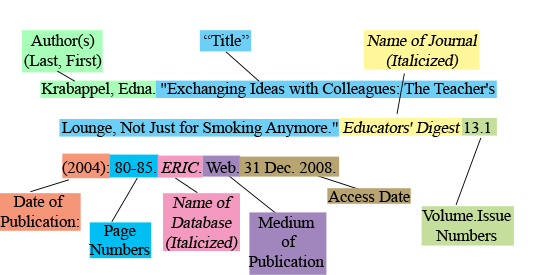
Ensuring proper citations and references in business management dissertations involves the creation of a comprehensive reference list. This list serves as a detailed record of all the sources cited throughout the dissertation, providing readers with the necessary information to locate and verify the referenced materials.
Each entry in the reference list should follow the specific guidelines of the chosen citation style, including the author's name, publication date, title, and other relevant details. The comprehensive nature of the reference list is paramount, encompassing a diverse range of sources such as academic articles, books, reports, and electronic resources.
Researchers must pay careful attention to the accuracy and consistency of the information presented in each reference, ensuring that it aligns with the prescribed citation style. A well-organized and complete reference list not only upholds the academic integrity of the dissertation but also serves as a valuable resource for readers and researchers interested in exploring the cited works in greater detail.
C. Avoiding Plagiarism
Ensuring proper citations and references in business management dissertations is not only about following a specific citation style but also a critical measure to avoid plagiarism. Plagiarism, the act of presenting someone else's ideas or work as one's own without proper attribution, is a serious ethical violation in academic writing.
To prevent plagiarism, researchers must accurately cite all sources, including direct quotes, paraphrased content, and ideas that are not their own. Proper citation involves providing credit to the original authors or creators, and failure to do so undermines the integrity of the research. It is essential to use quotation marks for verbatim text and to include a citation for any information or insights derived from external sources.
Additionally, a comprehensive reference list at the end of the dissertation provides readers with the means to trace the origins of the cited material. By upholding ethical standards through proper citations, researchers contribute to the credibility and trustworthiness of their business management dissertations.
XV. Reviewing and Revising: The Final Touches

A. Seeking Feedback from Peers and Mentors
In the process of reviewing and revising business management dissertations, seeking feedback from peers and mentors is a valuable and constructive strategy. Peer and mentor feedback offer fresh perspectives and insights that can help identify areas for improvement, clarify arguments, and enhance the overall quality of the dissertation.
Peers can provide valuable input based on their diverse perspectives and experiences, while mentors, with their expertise in the field, can offer guidance on refining the research methodology, strengthening the theoretical framework, and ensuring alignment with academic standards.
Constructive feedback not only helps in addressing potential weaknesses but also contributes to the development of a more robust and polished final document. Collaborative engagement with peers and mentors during the reviewing and revising stages fosters a supportive academic environment and ultimately elevates the quality of the business management dissertations.
B. Editing for Clarity and Coherence
In the process of reviewing and revising business management dissertations, a crucial aspect involves meticulous editing for clarity and coherence. This step requires a comprehensive examination of the document to ensure that the ideas are expressed clearly and coherently throughout the text.
should pay attention to the organization of content, logical flow between sections, and the overall structure of the dissertation. Sentences and paragraphs should be refined to enhance readability, and transitions between ideas should be seamless.
Additionally, the use of clear and concise language is essential to convey complex concepts effectively. By focusing on clarity and coherence during the editing process, researchers can enhance the overall quality of the dissertation, making it more accessible to readers and strengthening the impact of the research. This attention to detail contributes to the professionalism and scholarly rigor of the business management dissertations.
C. Proofreading for Grammar and Style
In the final stages of reviewing and revising business management dissertations, a critical step involves proofreading for grammar and style. This meticulous examination aims to eliminate errors in spelling, punctuation, and grammar, ensuring that the language used is polished and conforms to the chosen style guide.
Researchers should pay attention to sentence structure, word choice, and the consistent application of formatting rules. Proofreading is crucial for maintaining a professional and academic tone, as well as enhancing the overall coherence and clarity of the business management dissertations.
Additionally, attention to detail in matters of grammar and style reflects the researcher's commitment to producing a high-quality, error-free document. By investing time in this final proofreading stage, researchers can present polished and well-crafted business management dissertations that meets the highest standards of academic writing.

Hard Binding Dissertation ( 4 Key Features)
2 year(s) ago
Psychology dissertation topics (5 Major Areas)
2 year(s) ago
Dissertation editor (5 Key Services)
2 year(s) ago
Dissertation Coaching (7 Main Benefits)
2 year(s) ago
Dissertation Acknowledgement Format ( 6 Key Tips)
2 year(s) ago
Psychology Dissertation Topics ( 7 Main Ideas)
2 year(s) ago
Dissertation Binding ( Key Tips)
2 year(s) ago
Dissertation editing services (8 Key Areas)
2 year(s) ago
Dissertation template (Student's Guide)
2 year(s) ago
How to come up with a dissertation topic (9 Key Steps)
2 year(s) ago

Radio Active Tutors is a freelance academic writing assistance company. We provide our assistance to the numerous clients looking for a professional writing service.
Need academic writing assistance ?
Order Now